Crossing the Tiber: Why Our New Project Is About Dinner, Not Ruins
This week my company, Intercoper, launched TrastevereFoodTour.com — the first twelve guides to the food tours of Rome’s most famous eating neighborhood, from cost breakdowns to dietary policies to how to evaluate a licensed guide. I want to use this space, as I usually do, to explain the reasoning. For a publisher whose work has always orbited the Colosseum, a food site is a deliberate step sideways, and the why is more interesting than the what.
The short version: Rome pulled us there. I’ve spent years writing about the Colosseum — its engineering, its politics, its afterlife — and Intercoper’s portfolio grew outward from that center: the Vatican, Pompeii down the coast. Trastevere is the natural next ring, for a reason every Rome traveler already knows: whatever you came to see by day, the evening ends across the Tiber. Covering Rome seriously and ignoring where Rome eats had become a gap in our own map — and once I saw the gap, I couldn’t unsee it.
One thing upfront about the division of labor: I’m a Rome researcher, not a food critic. The tasting judgments on the new site belong to the Intercoper Curator Team, who worked the neighborhood’s tour market operator by operator; my role is the one I hold across the portfolio — editorial director, keeper of the standard. What I bring to Trastevere is the Rome side of the story. And it turns out the Rome side is exactly what the food coverage was missing.
What a Rome Lens Catches
Most of what’s written about Trastevere’s food scene is written by the people selling it, and it floats free of the city’s actual history and geography. Put a Rome lens on it and things snap into focus:
The dishes on every “authentic Trastevere” menu — the offal classics, the carbonara lineage — weren’t born in Trastevere. They were born in Testaccio, around the old slaughterhouse, where workers were paid partly in the quinto quarto, the fifth quarter of the animal. That’s not trivia; it changes what “authentic” even means on that side of the river.
The Jewish Ghetto, a fixture of Trastevere tour itineraries, isn’t in Trastevere. It’s across the Tiber, in the Sant’Angelo district — a distinction with two thousand years of history in it, and one most tour listings blur for convenience.
And Campo de’ Fiori’s market, promised by tours at every hour, is a morning market. An evening tour that references it is selling you a photograph of a place that closed at lunch.
None of this requires a refined palate. It requires knowing Rome — and then having the discipline to publish what you find even when it complicates a sale. That lens is the whole project: I look at travel the way I’ve learned to look at Rome — as a researcher. It’s the same eye behind ColosseumRoman, the Vatican guides, Pompeii, and now this.
Trastevere’s Strange Problem
Trastevere has a strange problem. It is so beautiful that mediocre restaurants can survive for decades.
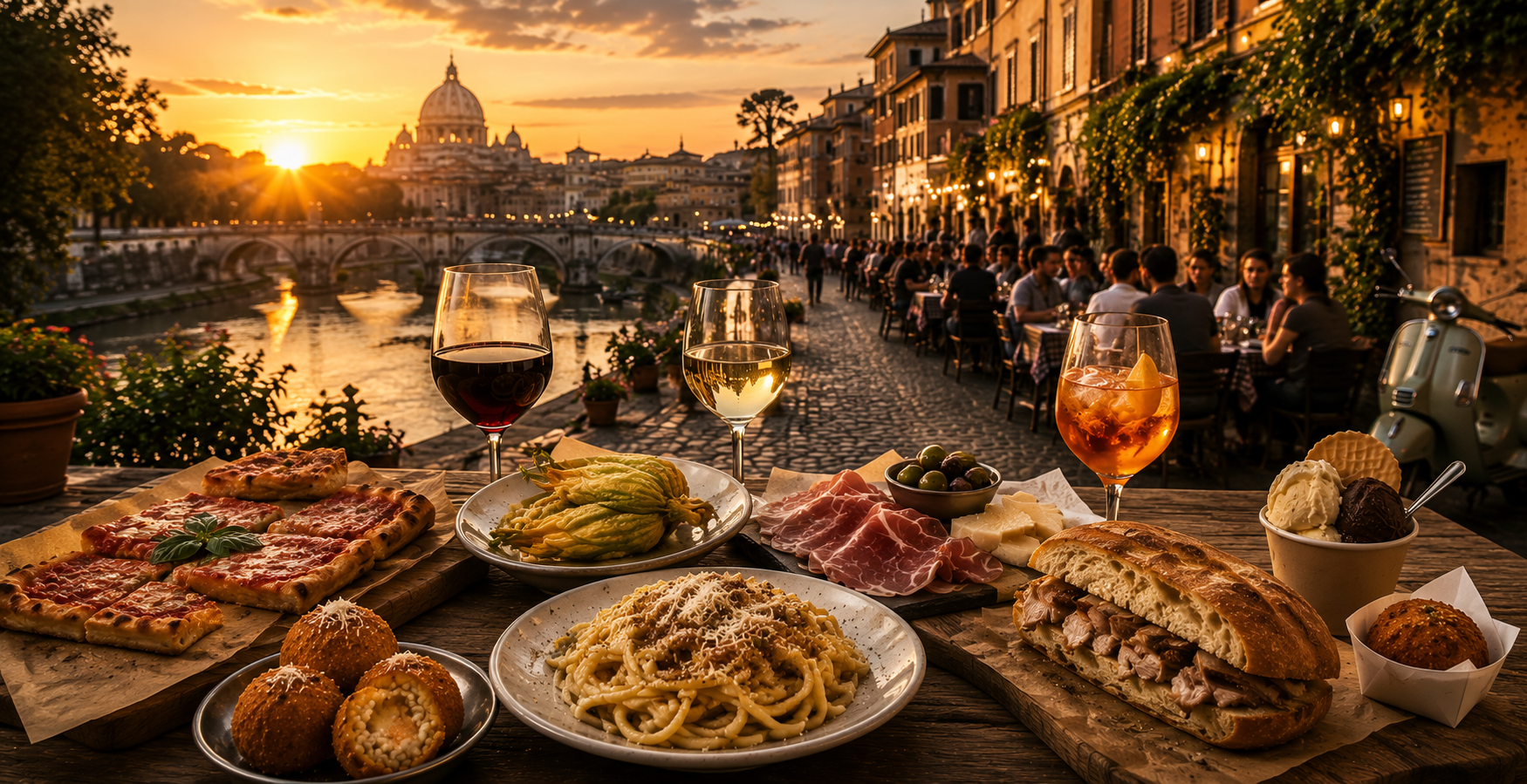
Ivy, cobblestones, a piazza at dusk — the setting does half the work of any dinner, which means the usual signals a traveler relies on (reviews, vibes, a full terrace) all inflate together. A monument can’t fool you this way; Trastevere can. And an entire content industry has grown around converting that atmosphere into superlatives.
That’s precisely the environment where Intercoper’s method earns its keep: verify everything against primary sources, publish prices as honest ranges instead of false precision, invent zero social proof, and say plainly what a tour does and doesn’t guarantee — including the fact that the famous family-run stops in the listings often rotate by departure and aren’t promised at all.
Why This Site Exists
So that’s the story of how this project was born: years of Rome research pulled the portfolio across the river, a beautiful neighborhood turned out to be the hardest place in the city to get an honest answer about dinner, and the knowledge we’d built stone by stone was the missing ingredient in how this market gets covered. The first twelve guides are live now.
Like every Intercoper project, this one will keep evolving — as Rome changes, as operators change, and as new evidence appears.
If you want to see how it turned out, it’s all at trasteverefoodtour.com. And if you’re interested in how I think about projects like this, you can follow along here or on LinkedIn.
— Mario
Mario Dalo is founder and editorial director of Intercoper and has spent years researching and writing about ancient Rome through ColosseumRoman.com.